
Lash glue and heating season: why extensions fall out faster in autumn and how to fix it
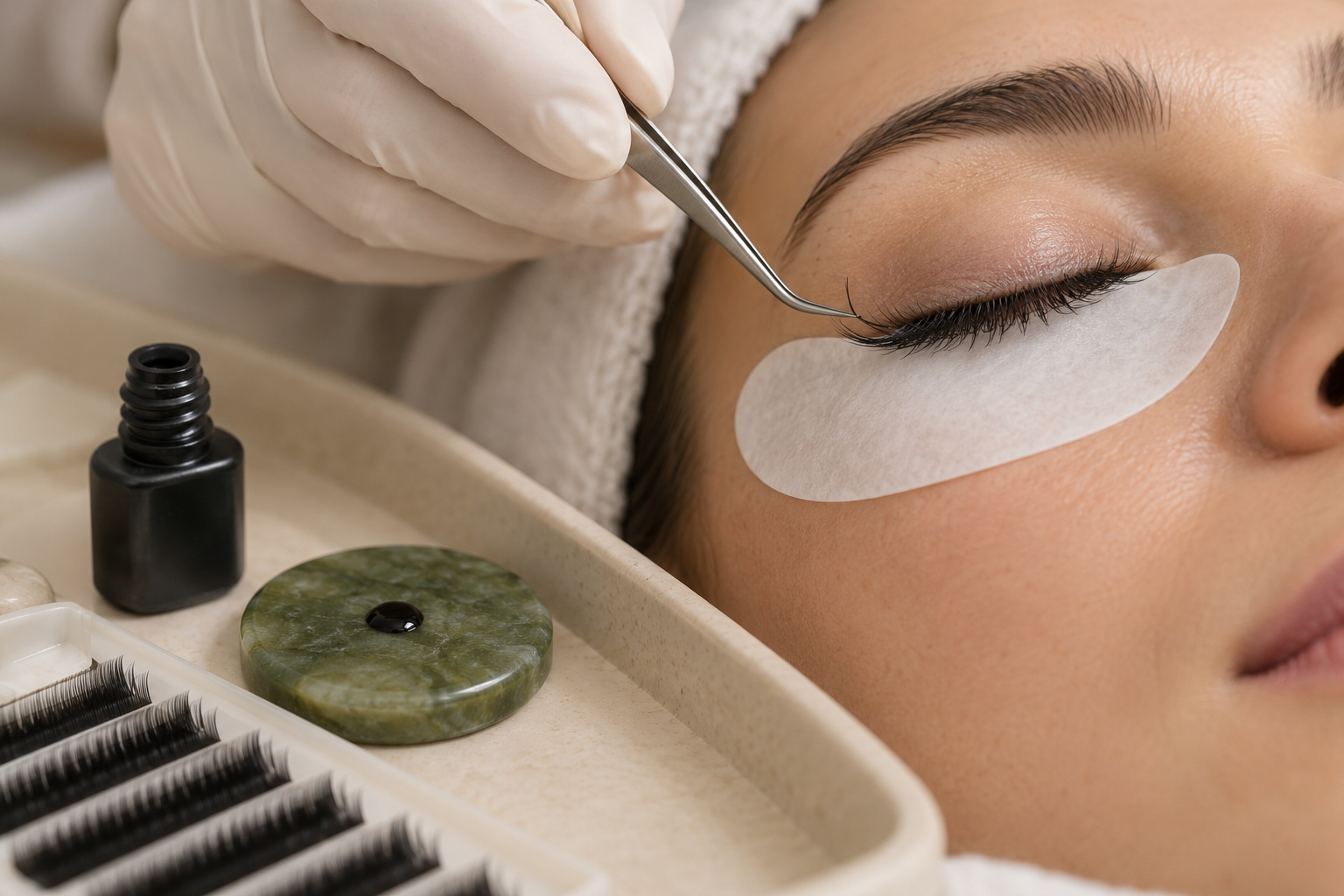
The heating is on and clients are coming back after a week with half their lashes gone? It's not a coincidence, and most often it's not your technique. The culprit is the air in your studio.
Why lash glue “feels” the weather
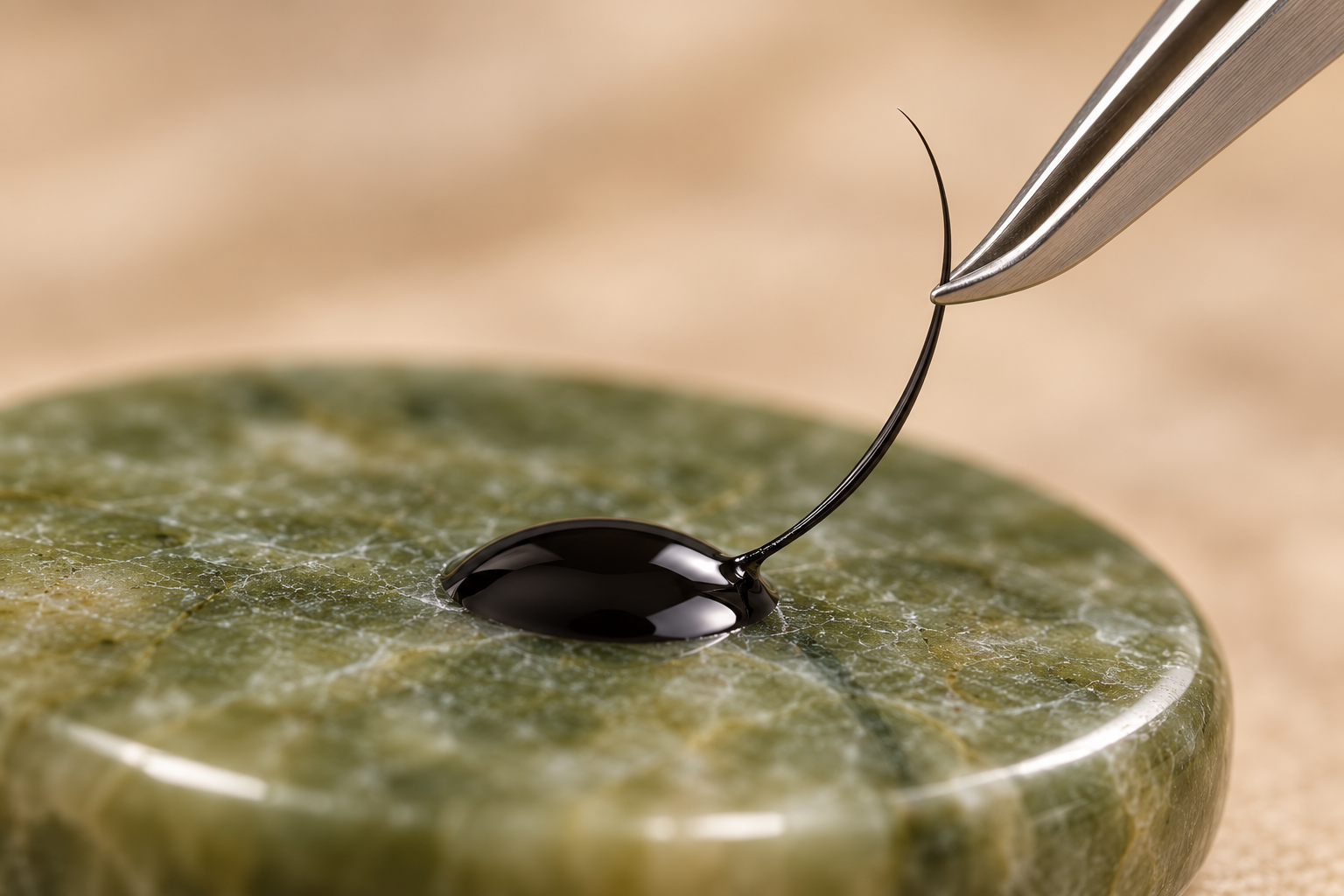
Lash extension glue is a cyanoacrylate that cures when it reacts with moisture in the air. With too little moisture, it cures slowly and incompletely, and the bond is weak. With too much, it cures instantly, turns brittle and leaves a white residue.
Once the heating is on, indoor humidity can drop to 20–30%. Most glues work best at around 40–60% humidity and 20–24°C. Check the exact range on your glue's label.
Step 1. Measure before you switch glue
Get a hygrometer. It costs very little and saves a lot of stress. Place it at your workstation, not by the window or the radiator. Check the reading in the morning and during the day, as humidity can change hour by hour.
Step 2. Match your glue to the humidity: cheat sheet
| Humidity | What happens | Which glue to choose |
|---|---|---|
| below 40% | glue cures slowly, lashes fall out | fast, 0.5–1 s |
| 40–60% | comfort zone | all-round, 1–2 s |
| above 60% | shock polymerization, white residue, stiffness | slower, 2–3 s |
Tip: in winter it's worth keeping two glues with different drying times in your studio and switching between them based on your hygrometer reading. See lash glues
Step 3. Improve your studio conditions
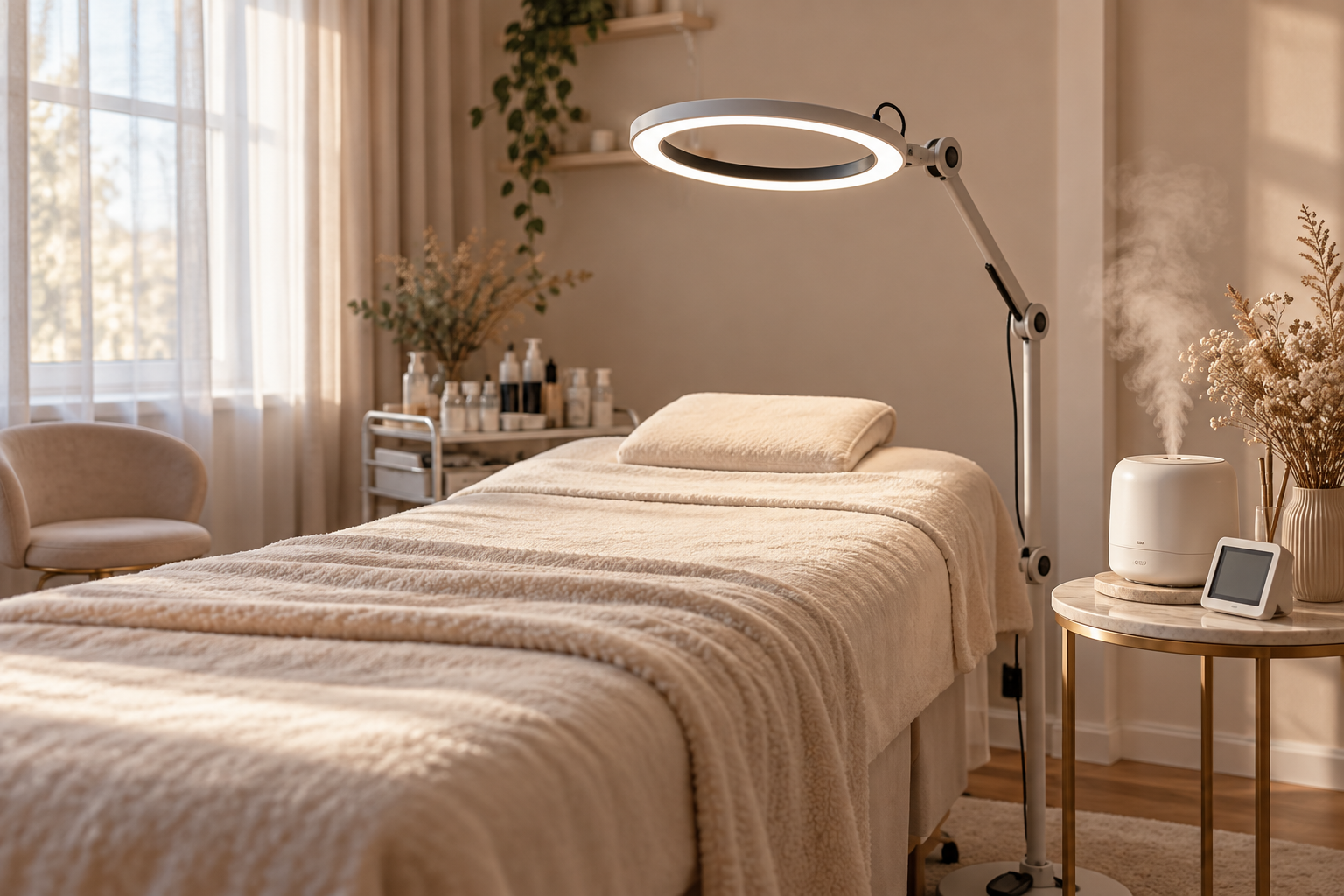
- An air humidifier is the easiest way to keep humidity stable during the heating season.
- A nano mister used after application helps the glue cure faster and more completely.
- Your workstation shouldn't stand next to a radiator or under the air conditioning. A stream of warm or cold air disrupts the curing.
Step 4. Store your glue properly
- Keep unopened glue in a cool, dark place. If you keep it in the fridge, wait about 30 minutes before opening so it reaches room temperature.
- Keep opened glue in an airtight container with a moisture absorber, but not in the fridge, as condensation will ruin it.
- Shake the bottle for about a minute before work and place a fresh drop every 15–20 minutes.
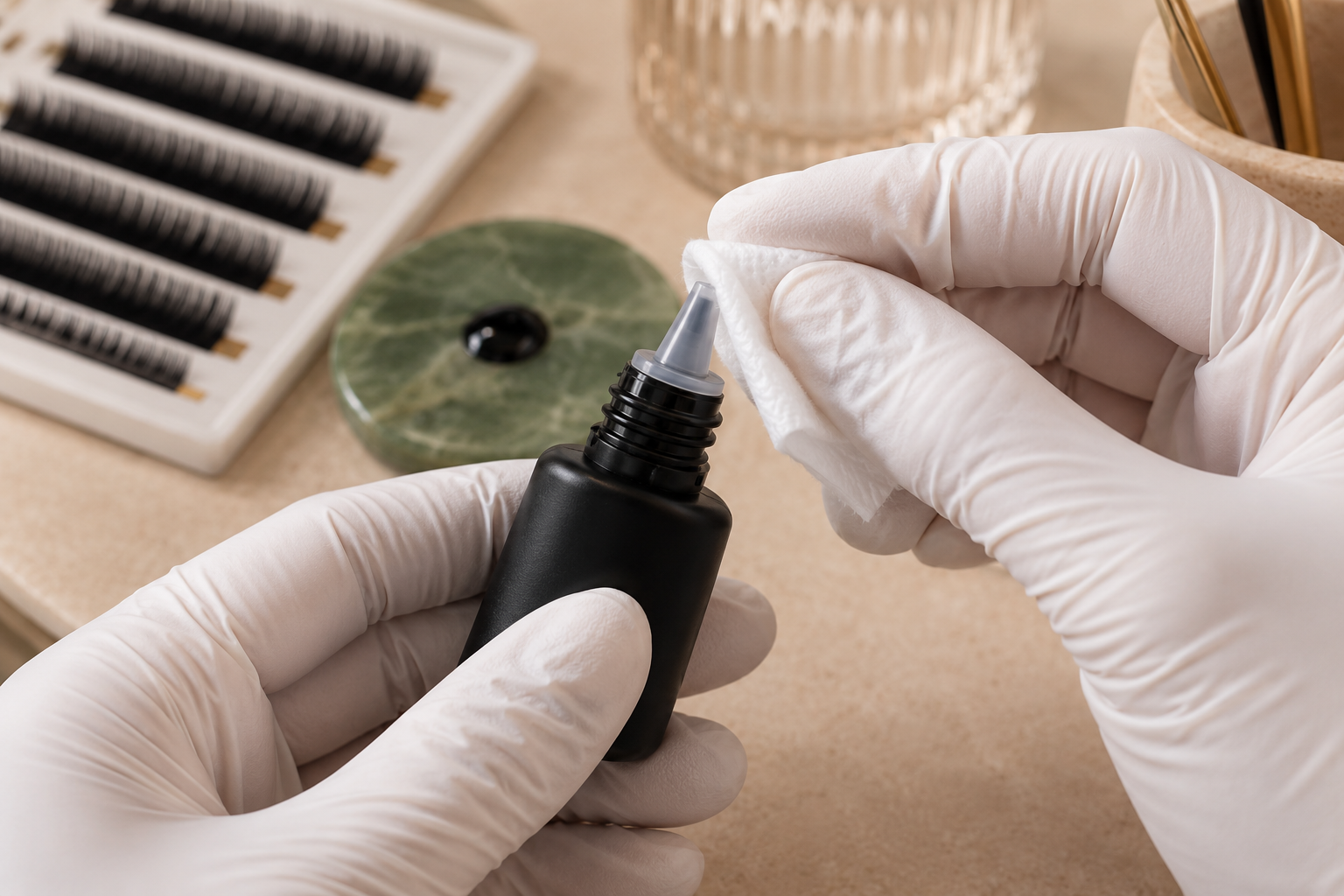
- Wipe the bottle nozzle after every use. Use up opened glue within the time stated by the manufacturer (usually about 4–6 weeks).
Step 5. Boost adhesion
- Primer removes sebum and makeup residue from natural lashes. Without it, even the best glue won't hold.
- Glue booster helps when humidity is extremely low or high.
- Sealer applied at the end of the treatment protects the bond and extends wear.
Quick diagnosis
Glue stayed on the extension while the natural lash is clean? The problem is cleansing, so start with primer. White residue and a hard bond mean the humidity is too high or the glue drop is too big.
You'll find glues with different drying times, primers, boosters and nano misters in our Lash Extensions category. Not sure which glue suits your studio? Message us and we'll help.


